
Passenger comfort is the heartbeat of public transit. As the technical lead at NEWBASE, I explain how our dual-system, dual-return air architecture achieves precise zoned climate control, enhancing comfort while drastically reducing energy waste.
HVAC is About "Comfort," Not Just Lowering Temperature
As a veteran engineer in the bus climate control industry, I frequently hear the same feedback from fleet managers: "The front of the bus is freezing, but passengers in the back are sweating." Maintaining a uniform temperature across a 12-meter or 18-meter bus has long been an industry-wide challenge.
In the electric era, the challenge goes a step further: we must provide ultimate passenger comfort while being extremely stingy with energy. The NEWBASE R&D team answered this with our Dual-Circuit, Dual-Return Air architecture. Today, I’ll explain how this design transforms the transit experience.
1. What is a Dual-Circuit, Dual-Return Air Structure?
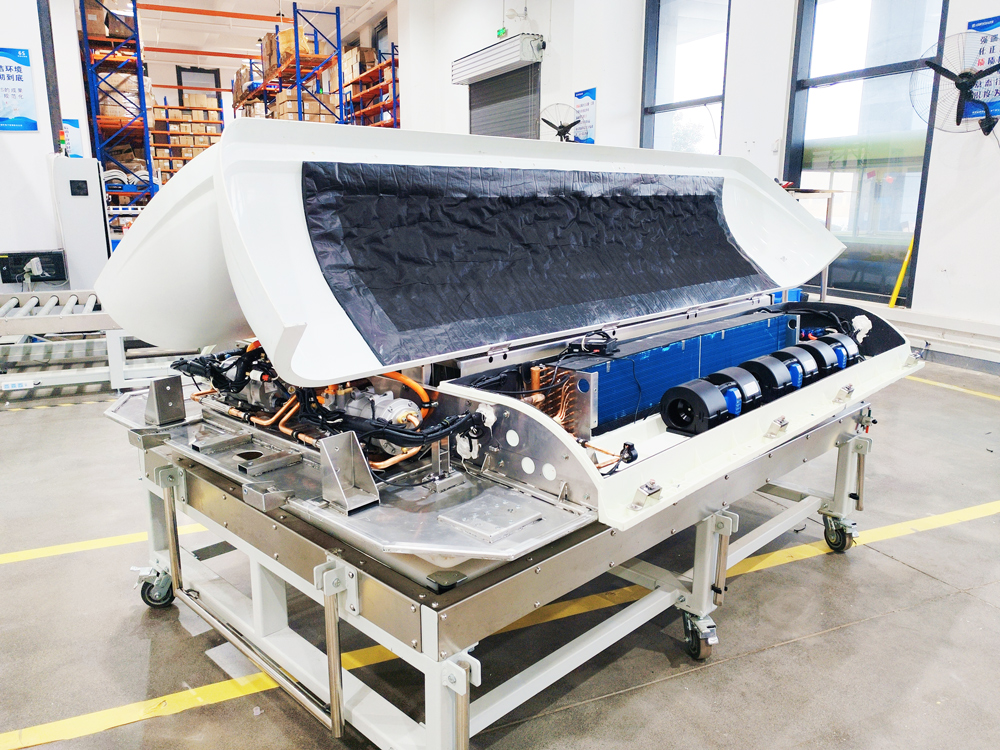
Traditional bus HVAC systems usually operate as one massive loop—all cold air is pushed through a single duct, and all return air is sucked through a single grille. This inevitably leads to "thermal stratification" and uneven pockets of air.
The NEWBASE Dual-circuit bus air conditioning system operates like two independent yet complementary systems housed within one integrated shell.
Independent Regulation: The front of the cabin (driver area and front door) and the rear (high-floor area) can adjust cooling capacity independently based on real-time passenger density.
Zoned Air Return: With dual return-air inlets, the system captures actual temperature data from different zones more accurately, preventing the system from "misjudging" the cabin climate due to localized heat buildup.
2. Solving the Industry Pain Point: Front vs. Rear Temperature Gap
During rush hour, the front door sees frequent passenger movement and heat ingress, while the rear of the bus is often crowded and enclosed.
Through our Zoned temperature control technology, the NEWBASE system performs:
Dynamic Compensation: When the system detects high-frequency front door operation, it automatically increases airflow to the front zone.
Thermal Equilibrium: We ensure that whether a passenger sits directly behind the driver or in the very last row, the temperature variance is kept within a tight ±1.5°C range.
3. Balancing Comfort and Efficiency: Cooling on Demand
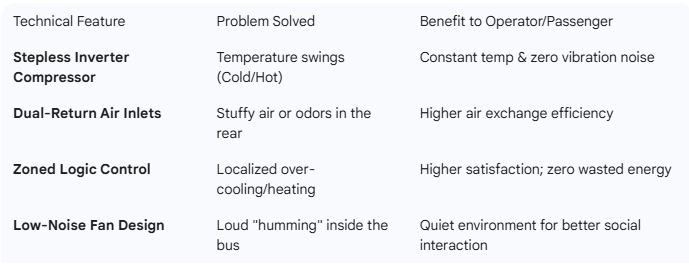
In Public transport climate control systems, the biggest waste of energy is "over-cooling" an area that doesn't need it.
NEWBASE Comfort & Efficiency Optimization Table
4. Why This Matters for an Operator’s "Brand"
In the competitive public transport market, a premium riding experience is key to encouraging citizens to leave their private cars and choose green transit.
Elevated Service Levels: A stable, quiet, and refreshing cabin environment significantly boosts the reputation of the transit authority.
Lower Complaint Rates: Solving the uneven temperature issue means fewer passenger complaints directed at the driver or the agency.
Energy Savings = Better Range: Precise zoned control means the system doesn't waste cooling power on zones that have already reached the target temperature, directly extending the vehicle's driving range.
Conclusion: Making Every Ride an Enjoyable Journey
At NEWBASE, we believe that technology ultimately serves people. While our integrated system guards battery safety, it is equally dedicated to providing every passenger with a stable, spring-like environment.
No matter if the world outside is scorching or freezing, entering a NEWBASE-equipped electric bus means entering a smart, quiet, and perfectly tempered space.
Looking to boost passenger satisfaction for your fleet?
Our experts can provide optimization advice on air duct design and zoned thermal management.