

Traditional decoupled thermal systems are holding back electric bus performance. Join me as I explore how NEWBASE’s integrated HVAC and BTMS architecture reduces weight by 20% and costs by 30% while maximizing fleet range.
The Invisible Challenge in Electric Mobility
As an engineer who has spent over 20 years in the commercial vehicle HVAC industry, I’ve witnessed a massive shift toward electrification. However, I often see a recurring problem: many electric buses still use "siloed" systems—one unit for cabin air conditioning and a completely separate setup for battery cooling.
In my experience at NEWBASE, we realized early on that this decoupled approach is inefficient. It adds unnecessary weight, consumes more energy, and complicates the vehicle's architecture. That is why we developed the Integrated HVAC & Battery Thermal Management System (ITMS). Today, I want to share why this integration is no longer just an option—it is a necessity for the next generation of zero-emission transit.
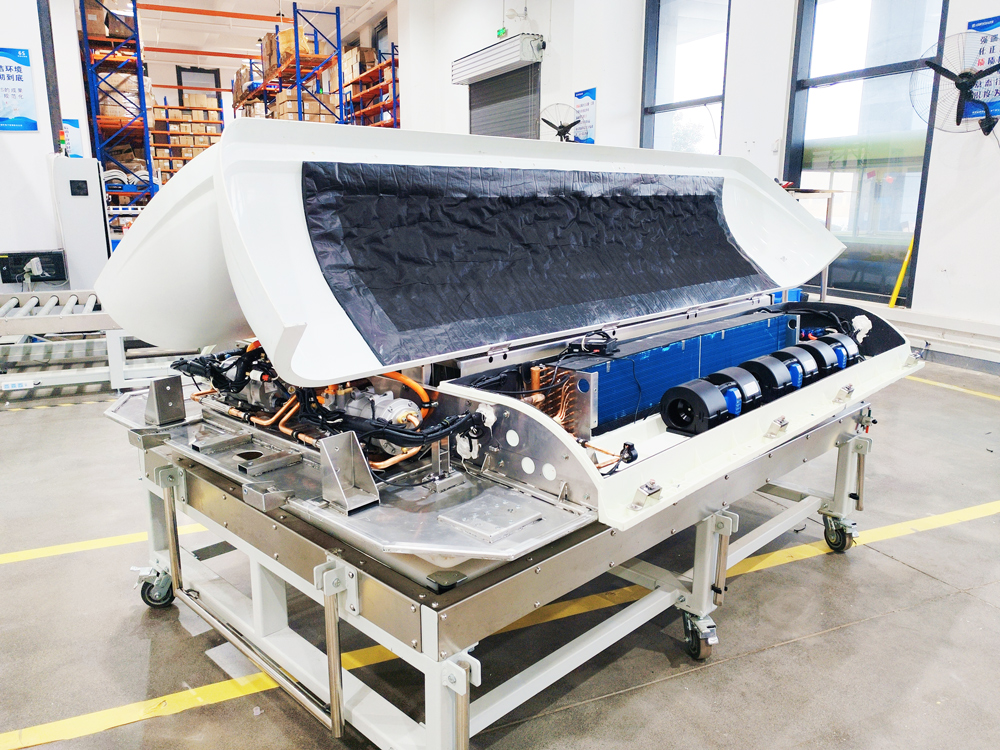
1. Breaking the Silos: What is an "Integrated" System?
When I talk about Integrated HVAC and BTMS, I’m referring to a unified thermal platform. Instead of having two independent refrigerant loops, our system shares core components like the compressor, condenser, and control logic to manage both the passenger environment and the battery's health.
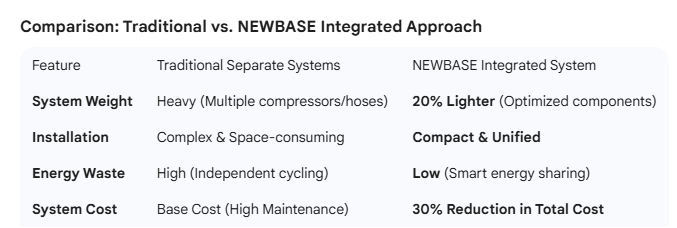
Comparison: Traditional vs. NEWBASE Integrated Approach
2. The Power of "Less is More": 20% Lighter, 30% More Cost-Effective
In the world of electric buses, weight is the enemy of range. Every extra kilogram of hardware means fewer kilometers on the road. By merging the cabin AC and the Battery Thermal Management System (BTMS) for electric buses, we have successfully stripped away redundant brackets, piping, and housings.
For fleet operators, this is a double win. Not only does the reduced weight EV HVAC system extend the vehicle's driving range, but the simplified design also leads to a 30% reduction in system cost. When you are managing a fleet of 50 or 100 buses, these savings translate directly into a much lower Total Cost of Ownership (TCO).
3. All-in-One Thermal Management for EVs: A Smarter Logic
Integration isn't just about physical space; it's about intelligence. Our system uses a Smart PID Control Algorithm that monitors the thermal needs of both the battery and the passengers in real-time.
Imagine a scenario where the battery is overheating during rapid charging, but the cabin is already cool. A traditional system would struggle to balance these needs. Our all-in-one thermal management for EVs intelligently redirects refrigerant flow through Multi-channel Electronic Expansion Valves (EEVs) to prioritize cooling where it is needed most, ensuring neither passenger comfort nor battery safety is compromised.
4. Simplifying Vehicle Architecture
From a bus manufacturer's (OEM) perspective, the NEWBASE system is a game-changer for design flexibility.
Fewer Leak Points: Fewer hoses and connections mean a lower risk of refrigerant leakage.
Plug-and-Play Installation: A unified unit reduces assembly time on the production line.
Space Optimization: More room on the roof or in the chassis for additional battery packs or passenger space.
Conclusion: Engineering a Greener Road Ahead
The transition to zero-emission transit thermal solutions requires more than just switching from diesel to electric; it requires a fundamental rethink of how we manage energy. At NEWBASE, we believe that integration is the key to sustainability.
Our Combined Cabin and Battery Cooling System is more than just a product—it’s our contribution to a more efficient, reliable, and affordable public transport future.
Would you like to optimize your fleet's thermal performance?
As we look toward the road ahead, I invite you to explore how our integrated solutions can fit your specific vehicle requirements.