

NEWBASE · New Progress · New Dynamics
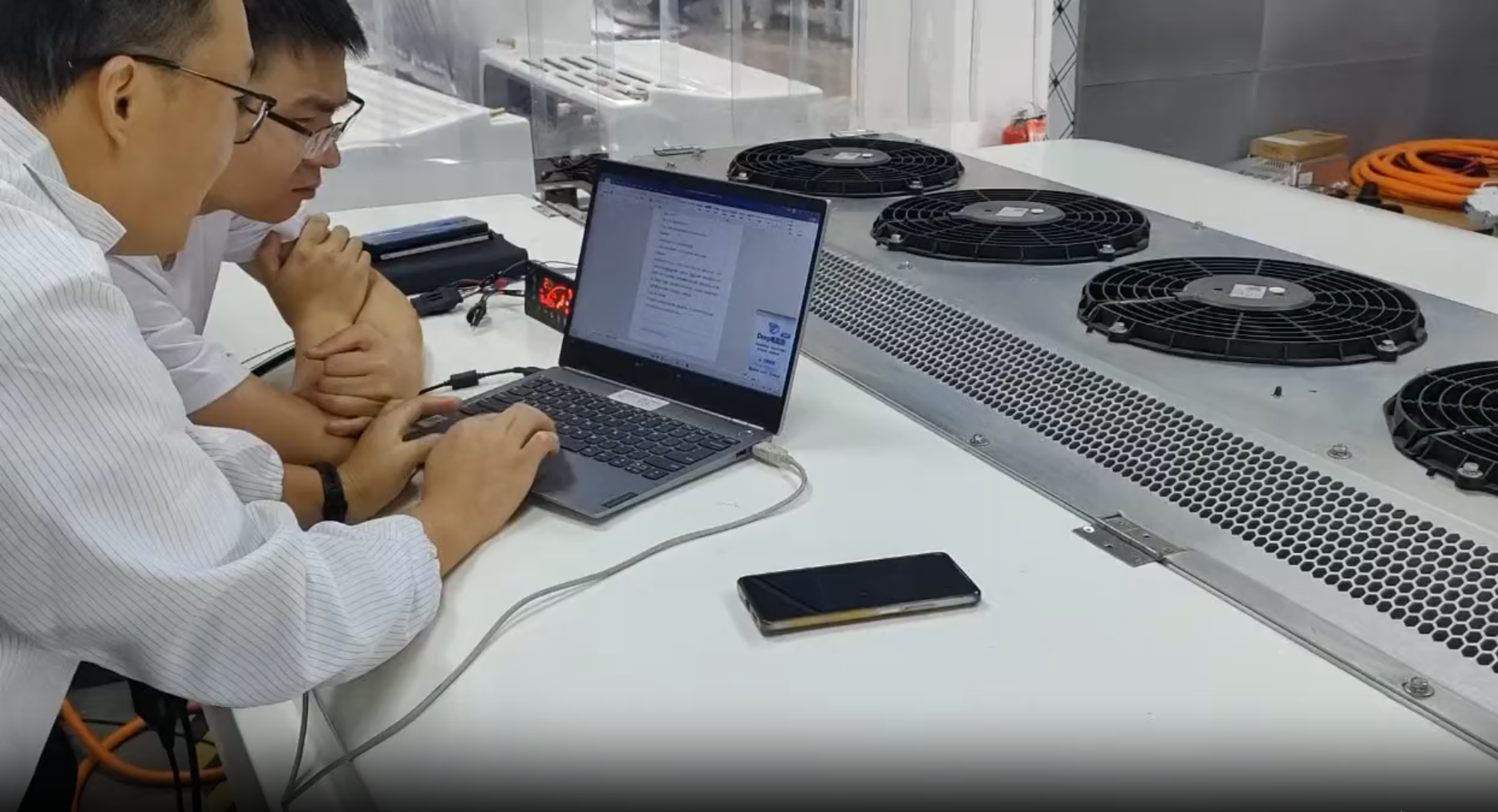
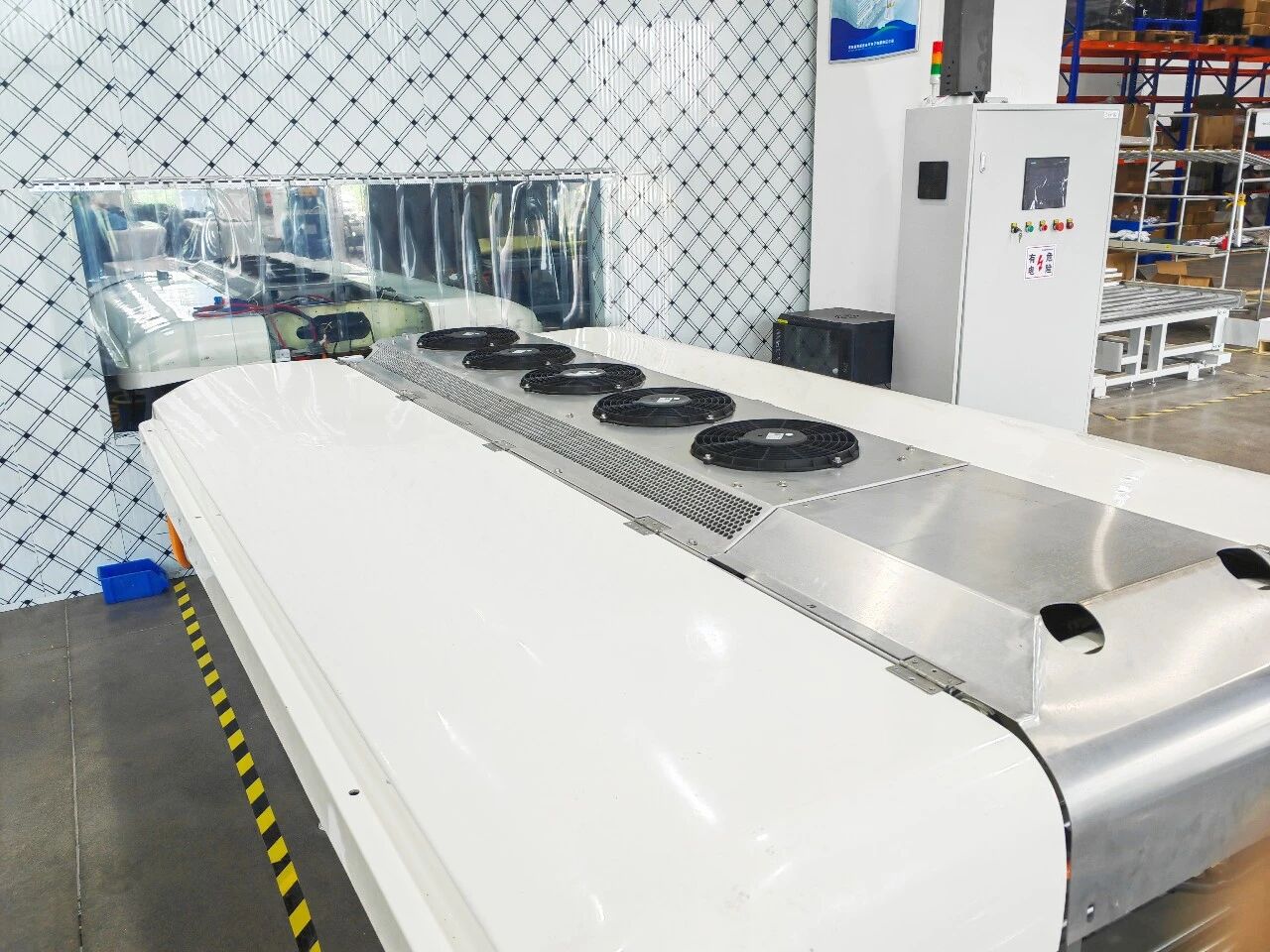
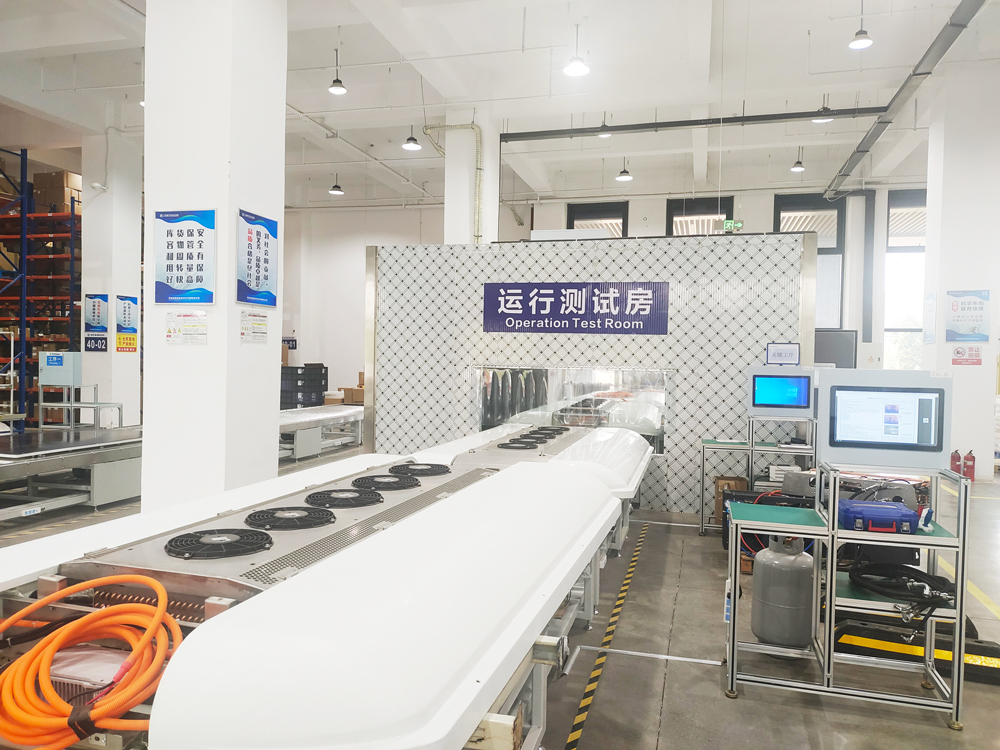
Recently, Newbase successfully completed the integrated joint commissioning of the air conditioning system and 600kWh Battery Thermal Management System for 18m articulated buses. Conducted strictly in accordance with technical specifications in a laboratory environment, the commissioning included a series of tests on key indicators such as high-voltage withstand voltage, functional operation, electronic control logic, electrical safety, and water circuit circulation. All test results fully met the design standards, marking Newbase’s further technological advancement in the field of commercial vehicle integrated thermal management, and providing reliable technical support for the efficient operation of new energy buses.
Integrated Architecture Enables Collaborative Efficiency
The core achievement of this joint commissioning is the construction of an integrated intelligent control system combining "air conditioning + Battery Thermal Management System". Through hardware integration and software collaboration, it resolves the resource waste issues inherent in traditional decentralized systems, with distinct technical highlights as follows:
Optimized Hardware Integration: The air conditioning circuit and battery thermal management circuit are designed in parallel, sharing core components including compressors, condensers, condensing fans, and liquid storage tanks. This reduces the number of redundant parts by approximately 30%, simplifies pipeline layout, and cuts down the overall vehicle weight.
Intelligent Collaborative Control: Based on the linkage logic between the Battery Management System (BMS) and the air conditioning controller, the system realizes "on-demand heat distribution". Heat exchange between systems is accomplished via an intermediate heat exchanger, achieving efficient energy utilization in both cooling and heating scenarios.
Full Working Condition Adaptability: Targeting typical operating scenarios such as high summer temperatures, low winter temperatures, and fast charging, a precise control strategy has been established. In high temperatures, the cooling capacity of the air conditioner is simultaneously supplied to cool both the passenger compartment and the battery. In low temperatures, waste heat from battery heating is recovered to warm the passenger compartment. During fast charging, priority is given to battery cooling (controlling the cell temperature below 35°C), ensuring stable vehicle operation under all working conditions.
Multi-dimensional Optimization of Operational Experience
The successful implementation of integrated joint commissioning creates tangible value for users across four key dimensions—energy efficiency, service life, performance, and cost—aligning perfectly with the core operational needs of new energy public transport:
Enhanced Energy Efficiency: The energy consumption ratio of the thermal management system has been reduced from 12% to 8%, cutting the overall vehicle energy consumption by 15–20%. A closed energy loop is formed through the cascade utilization model: motor waste heat → battery preheating → passenger compartment heating.
Extended Battery Service Life: The battery operating temperature is accurately controlled within the optimal range of 20°C–40°C, reducing the system temperature difference by 50%. This minimizes the risks of thermal runaway and capacity degradation, significantly lowering battery failure rates and extending the replacement cycle from 3 years to 5 years.
Stable Performance Output: In a wide temperature range of -35°C to 45°C, the vehicle’s range achievement rate is increased by over 70%. It supports fast charging from 10% to 80% in just 30 minutes. Meanwhile, reduced air conditioning energy consumption indirectly increases the driving range by up to 50km.
Cost Optimization: Reduced redundant component configuration and pipeline complexity lower the overall vehicle manufacturing cost. Combined with operational energy savings, a single vehicle can save approximately 16,000 yuan in annual operating costs, calculated based on a daily operation of 300km and an electricity price of 1 yuan per kWh.
Empowering Industry Development with Professional Strength
As a technology-driven enterprise specializing in commercial vehicle thermal management, Newbase has always regarded technological innovation as its core competitiveness, focusing on integrated and intelligent thermal management solutions. The success of this articulated bus integrated joint commissioning is a mature outcome achieved through hardware integration, software iteration, and working condition verification, built on a profound understanding of new energy public transport operational scenarios. It demonstrates Newbase’s accumulated expertise in system integration and precise control. This breakthrough not only lays a solid foundation for Newbase to expand its commercial vehicle thermal management market but also showcases the practical value of integrated thermal management to the industry, providing a replicable technical solution for the efficient development of urban green public transport. Going forward, the enterprise will continue to focus on technical optimization and scenario adaptation, delivering more reliable and efficient thermal management products and services for the new energy commercial vehicle industry.